M.H. Material Handling porterà a CibusTec 2026 una selezione della gamma Sani-Line e una soluzione sviluppata con SteamItaly per mostrare come Hygienic Design e pulizia integrata possano convivere nello stesso progetto
Nell’industria alimentare una linea non viene progettata solo per produrre. Deve essere pensata anche per tutto ciò che accade quando la produzione si ferma: lavaggio, ispezione, sanificazione e ripartenza. Se queste operazioni vengono considerate solo a macchina finita, il rischio è di complicare attività che dovrebbero invece essere semplici e ripetibili.
Per questo l’Hygienic Design non può ridursi alla scelta dell’acciaio inox. Significa lavorare sulla geometria della macchina, eliminare superfici orizzontali e punti di ristagno, evitare zone difficili da raggiungere, favorire il drenaggio e rendere accessibili le parti che devono essere pulite. La pulibilità, in altre parole, deve essere prevista già in fase di progetto.
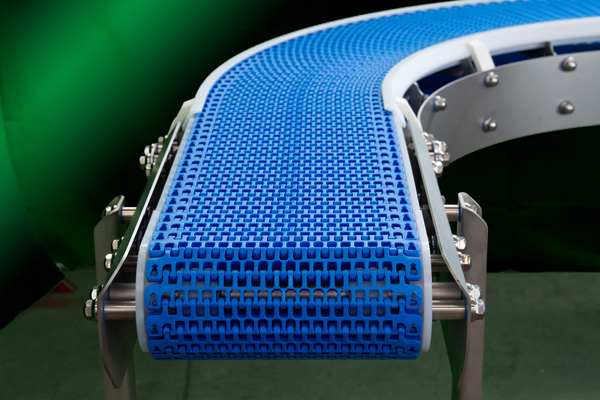 È da questa logica che nasce Sani-Line, la famiglia di soluzioni igieniche di M.H. Material Handling. Sani-Flex applica questi principi ai nastri modulari, con struttura aperta in AISI 304, saldature continue e catena sollevabile manualmente per facilitare l’accesso durante il lavaggio. Sani-Belt estende lo stesso approccio ai nastri a tappeto, mentre Sani-Lift permette di gestire i cambi di quota mantenendo la stessa attenzione alla facilità di pulizia.
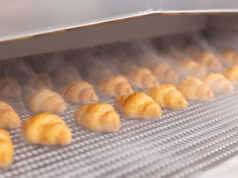
Ma progettare una macchina facile da lavare è solo una parte del lavoro. Il passo successivo è integrare la pulizia direttamente nel sistema di movimentazione. Da qui nasce la collaborazione con SteamItaly e lo sviluppo di Steam-Flex, una soluzione che abbina il trasporto a una camera di pulizia a vapore installata direttamente sul nastro.
L’obiettivo non è sostituire ogni procedura di sanificazione, ma progettare insieme movimentazione e pulizia, portando l’azione del vapore direttamente sulla superficie di trasporto e inserendo questa tecnologia all’interno della gestione igienica della linea.
È questo approccio che M.H. Material Handling porterà a CibusTec 2026: una selezione della gamma Sani-Line e una soluzione sviluppata con SteamItaly per mostrare concretamente come Hygienic Design e pulizia integrata possano convivere nello stesso progetto.
Perché una linea igienica non deve essere pensata soltanto per funzionare bene durante la produzione, ma anche per essere pulita, controllata e rimessa in servizio in modo semplice.
Hygienic Design: Designing for cleaning as well
M.H. Material Handling will bring to CibusTec 2026 a selection of the Sani-Line range and a solution developed with SteamItaly to show how Hygienic Design and integrated cleaning can work together within the same project
In the food industry, a production line is not designed only to run. It also needs to take into account everything that happens when production stops: washing, inspection, sanitation and restart. If these activities are only considered once the machine has already been built, there is a risk of making tasks unnecessarily complex when they should instead be simple and repeatable.
This is why Hygienic Design cannot be reduced to the choice of stainless steel. It means working on the machine geometry, limiting horizontal surfaces and stagnation points, avoiding hard-to-reach areas, promoting drainage and making all parts that require cleaning easily accessible. In other words, cleanability has to be considered from the design stage.
This is the principle behind Sani-Line, the family of hygienic solutions developed by M.H. Material Handling. Sani-Flex applies these concepts to modular conveyors, with an open AISI 304 stainless-steel structure, continuous welds and a modular chain that can be lifted manually to facilitate access during cleaning. Sani-Belt brings the same approach to belt conveyors, while Sani-Lift makes it possible to manage changes in elevation while maintaining the same focus on ease of cleaning.
But designing a machine that is easy to wash is only part of the work. The next step is to integrate cleaning directly into the conveying system. This is where the collaboration with SteamItaly and the development of Steam-Flex come into play: a solution that combines product conveying with a steam-cleaning chamber installed directly on the conveyor.
The goal is not to replace every sanitation procedure, but to design conveying and cleaning together, bringing the action of steam directly to the conveying surface and integrating this technology into the hygienic management of the line.
This is the approach that M.H. Material Handling will bring to CibusTec 2026: a selection of the Sani-Line range and a solution developed with SteamItaly to show how Hygienic Design and integrated cleaning can work together within the same project.
Because a hygienic line should not only be designed to perform well during production, but also to be cleaned, inspected and brought back into operation as simply as possible.