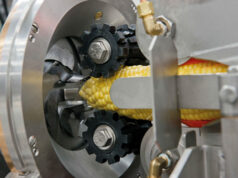
Il giunto IPK di R+W Italia rappresenta una vera e propria evoluzione nella componentistica meccanica, non più un semplice elemento di trasmissione, ma un componente smart integrato
Il settore alimentare è uno dei comparti industriali più complessi e regolamentati. Ogni fase della produzione, dalla trasformazione delle materie prime al confezionamento, richiede non solo precisione e qualità, ma anche il massimo livello di sicurezza igienica. In un mercato che si muove tra esigenze normative stringenti, domanda crescente di sostenibilità e continua innovazione tecnologica, i componenti meccanici rivestono un ruolo cruciale. Tra questi, i giunti di precisione a soffietto metallico, ad elastomero e le allunghe si confermano elementi indispensabili per garantire affidabilità, durata e performance delle macchine impiegate nelle linee produttive alimentari. Ogni tipologia di giunto risponde a esigenze specifiche.
I giunti a soffietto metallico garantiscono rigidità torsionale elevata e assenza di gioco, risultando ideali per applicazioni ad alta precisione come quelle del confezionamento automatico. I giunti ad elastomero, invece, uniscono capacità di compensare disallineamenti e smorzamento delle vibrazioni, proteggendo così macchine e operatori da sovraccarichi o urti improvvisi. Le allunghe completano il sistema, permettendo di trasmettere coppia a distanza e adattare la meccanica alle geometrie complesse degli impianti.
L’integrazione di questi elementi consente alle aziende del settore alimentare di mantenere elevati livelli di efficienza, ridurre i tempi di fermo macchina e aumentare la sicurezza operativa.
Acciaio inox: il materiale chiave per igiene e longevità
Nel mondo dell’alimentare, la scelta dei materiali non è mai secondaria: ogni componente a contatto diretto o indiretto con il prodotto deve rispondere a criteri stringenti di igiene, sicurezza e resistenza. È in questo contesto che l’acciaio inox si afferma come la soluzione ideale.
La sua caratteristica principale è la resistenza alla corrosione: questo rende l’acciaio inox perfetto per ambienti dove sono frequenti lavaggi ad alta pressione, utilizzo di detergenti chimici aggressivi e cicli di sanificazione ripetuti.
Oltre all’aspetto igienico, l’inox offre un’elevata resistenza meccanica e termica, sopportando sollecitazioni, vibrazioni e variazioni di temperatura che caratterizzano le linee di produzione alimentari. Un altro vantaggio fondamentale è la facilità di pulizia: la superficie liscia e non porosa riduce la possibilità di accumulo di batteri e residui organici, assicurando la conformità alle normative HACCP e FDA. Per questo motivo, i componenti in acciaio inox non sono solo una scelta tecnica, ma una vera e propria garanzia di qualità per l’intera filiera produttiva.
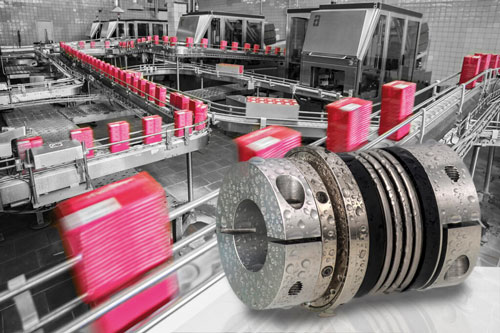 In questo scenario si collocano i giunti in acciaio inox R+W Italia, studiati appositamente per mantenere performance elevate anche in condizioni operative estreme. L’utilizzo di questo materiale nei giunti consente di abbinare precisione nella trasmissione della coppia e durata nel tempo, senza compromessi sulla sicurezza alimentare.
Il giunto IPK: il cuore digitale della meccanica nell’industria alimentare
Il giunto IPK di R+W Italia rappresenta una vera e propria evoluzione nella componentistica meccanica. Non più un semplice elemento di trasmissione, ma un componente smart integrato, concepito per rispondere con precisione alle esigenze dell’Industria 5.0, orientata alla sostenibilità, alla personalizzazione e alla cooperazione uomo-macchina.
Il giunto IPK rileva in tempo reale parametri chiave come coppia e velocità grazie a una sensoristica miniaturizzata integrata. Questi dati vengono elaborati direttamente trasmessi via Bluetooth o tramite gateway al sistema di controllo o a dispositivi mobili, offrendo una visibilità istantanea sullo stato operativo dell’impianto. Nel contesto dell’Industria 5.0, il ruolo di componenti smart come IPK va oltre la mera automazione. Si tratta di soluzioni pensate per coesistere con l’ingegno umano, garantendo:
- Automazione collaborativa: il monitoraggio supporta l’operatore nella prevenzione di guasti e nella gestione predittiva, riducendo imprevisti e downtime.
- Massima personalizzazione dei processi: grazie alla raccolta dati in tempo reale, è possibile ottimizzare la produzione su lotti specifici, varietà di prodotto o condizioni operative diverse.
- Sostenibilità e continuità operativa: riduzione di scarti e consumi, vita utile prolungata delle macchine sono elementi chiave per un’industria alimentare più responsabile e resiliente.
Il mondo dell’alimentare si regge su un delicato equilibrio tra sicurezza, efficienza e innovazione. I giunti di R+W Italia a soffietto metallico, ad elastomero e allunghe, uniti al contributo della Tecnologia IPK, rappresentano l’infrastruttura silenziosa ma fondamentale che permette al settore di crescere e affrontare le sfide del futuro.
In un comparto dove ogni dettaglio può fare la differenza, scegliere componenti di qualità non significa solo migliorare la performance delle macchine, ma anche garantire un prodotto finale più sicuro e affidabile per il consumatore.
Innovation and reliability in the food industry: The role of precision couplings
The IPK coupling from R+W Italia is a significant evolution in mechanical components, no longer just a transmission element, but an integrated smart component
The food industry is one of the most complex and highly regulated industrial sectors. Every stage of production, from processing raw materials to packaging, requires precision, quality, the highest level of hygiene, and safety. In a market subject to stringent regulatory requirements, growing demand for sustainability, and continuous technological innovation, mechanical components play a crucial role. Precision metal bellows couplings, elastomer couplings, and extension couplings are indispensable for ensuring the reliability, durability, and performance of machines in food production lines.
Each type of coupling meets specific requirements.
Metal bellows couplings guarantee high torsional rigidity and zero backlash, making them ideal for high-precision applications, such as automatic packaging. Elastomer couplings, on the other hand, can compensate for misalignments and dampen vibrations. This protects machines and operators from sudden overloads or impacts. Extension couplings complete the system by allowing torque to be transmitted over distance and enabling adaptation to complex system geometries.
Integrating these elements enables companies in the food industry to maintain high efficiency levels and reduce downtime.
Stainless steel is the key material for hygiene and longevity.
In the food industry, the choice of materials is never secondary. Every component that comes into contact with the product, whether directly or indirectly, must meet strict hygiene, safety, and resistance criteria. In this context, stainless steel stands out as the ideal solution.
Its primary feature is corrosion resistance, making it perfect for environments where high-pressure washing, aggressive chemical detergents, and repeated sanitation cycles are common.
In addition to its hygienic properties, stainless steel offers high mechanical and thermal resistance. It can withstand the stresses, vibrations, and temperature variations that characterize food production lines. Another advantage is that it is easy to clean. Its smooth, non-porous surface reduces the possibility of bacteria and organic residues accumulating, ensuring compliance with HACCP and FDA regulations. For these reasons, stainless steel components are a technical choice and a real guarantee of quality for the entire production chain.
This is where R+W Italia’s stainless steel couplings come in. They are specially designed to maintain high performance even under extreme operating conditions. Using this material in couplings ensures precise torque transmission and durability without compromising food safety.
The IPK coupling: The digital heart of mechanics in the food industry
The IPK coupling from R+W Italia is a significant evolution in mechanical components. It is no longer just a transmission element; it is an integrated smart component designed to respond precisely to the needs of Industry 5.0, which focuses on sustainability, customization, and human-machine cooperation.
Thanks to integrated miniaturized sensors, the IPK coupling detects key parameters such as torque and speed in real time. This data is processed and transmitted directly via Bluetooth or through a gateway to the control system or mobile devices, providing instant visibility into the plant’s operating status. In the context of Industry 5.0, smart components like the IPK play a role that goes beyond mere automation. They are solutions designed to coexist with human ingenuity, ensuring:
- Collaborative automation: Monitoring supports the operator in preventing faults and managing them proactively, reducing unexpected events and downtime.
- Maximum process customization: Real-time data collection allows for optimization of production for specific batches, product varieties, and different operating conditions.
- Sustainability and operational continuity are key elements for a more responsible and resilient food industry. This includes reducing waste and consumption, as well as extending the service life of machines.
The food industry relies on a delicate balance of safety, efficiency, and innovation. R+W Italia’s metal bellows, elastomer, and extension couplings, combined with IPK technology, represent the fundamental yet often overlooked infrastructure that enables the sector to grow and overcome future challenges.
In an industry where every detail matters, selecting high-quality components improves machine performance and ensures a safer, more reliable end product for consumers.